In Exile

Recently, I’ve been reviewing Hillsdale College’s Constitution 101 course, which is offered online for free. This is a great introduction not only to the Constitution but also to how the founding fathers thought about the American Mind. One of the defining principles of the Constitution was that our founding fathers …

It Ain’t About the Pill, Baby!

The title of this post is taken from Kathleen Parker’s excellent editorial on this topic which was published yesterday. My father has a saying. When 20 people say you’re drunk, it’s time to lay down. It appears that we have a president who is three sheets to the wind on …

CF153: PET Project

Play

Podcast: Download In this episode:  Caramels, National Youth Leadership Training,  Christmas Eve mass, visiting the family, when Christmas gets radical,  PET Project, Miss Marjorie Smoot, Kathryn’s Birthday. Jenny Crook “The First Noel” (mp3) from “Christmas Harp – Elegant Expressions of Christmas with Celtic & Concert Harps” (Classic Fox Records) Picture …

CF152: The Nativity of the Lord

Play

Podcast: Download The Sweeney kids record the Christmas Eve gospel reading from Luke, Chapter 2. It’s poignant that the Sweeney kids did the same reading in 2007 with much smaller voices and minus a little sister (Mattie Claire). It’s interesting to compare their voices. Music by Jenny Crook from the …

Recent Articles:

In Exile

May 11, 2012 Blogs, David, Feature No Comments
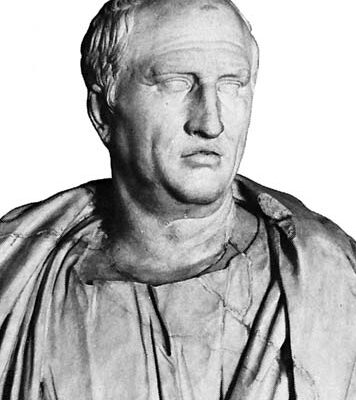
Marcu Tullius Cicero

Recently, I’ve been reviewing Hillsdale College’s Constitution 101 course, which is offered online for free. This is a great introduction not only to the Constitution but also to how the founding fathers thought about the American Mind. One of the defining principles of the Constitution was that our founding fathers held the truths in the Constitution to be self-evident and endowed by God, thus making them an extension of natural law, which is, by definition, self-evident and immutable. The nature of things does not change, only our perception of the thing. As we hold in the Catholic Church, the truths of natural law do not change through time and differing society. Truth is truth. Always. … Continue Reading

Worried About His Church?

During the early days of May, we are continuing to read about the first days of the Church. In my studies, I’ve come to enjoy the Acts of the Apostles and the stories of building up the Body of Christ which is His Church. In a recent Mass, there is the Scripture story about addressing conflict or issues in the early Church. There was the issue of circumcision. When they arrived in Jerusalem, Paul and Barnabus were welcomed by the Church, as well as by the Apostles and the presbyters, and they reported what God had done with them.

The Council of Jerusalem (or Apostolic Conference) is a name applied by historians and theologians to this early Christian council dated around the year 50. It is considered by Catholics and Orthodox to be a prototype and forerunner of the later Councils. This council in the year 50 decided that Gentile converts to Christianity were not obligated to keep most of the Mosaic law, especially concerning circumcision of males.

This idea of going back to the seat of the Catholic Church has been continued from those earliest days till now. Our Tucson Bishop Kicanas recently was in Rome, sometime after submitting a report on the conditions, the accomplishments and the challenges in this Tucson Diocese. I also read of the Ad Limina visit by the bishops from my old territory back in Colorado. I want to share some words from that meeting because of how much time many of us spend shaking our heads about all the problems and about what’s wrong with the Church.

Denver Bishop Conley said that the numbers of vocations were going up in the United States. He shared with the Pope that there is now a year-on-year increase in the numbers of young men opting for the priesthood across many US dioceses. Conley reported “I told Pope Benedict that in the Archdiocese of Denver both of our seminaries, St John Vianney Theological Seminary and Redemptoris Mater Neo-catechumenal seminary, are full. In fact we have more applicants than we have space so for the first time in many years we have to create a waiting list which is a good problem to have.” Holy Father Benedict was delighted to receive this information and had a great smile on his face. A recent study by the CARA Apostolate at Georgetown University estimated that U. S. seminary intake was up 4 percent over the previous year, and that it had reached its highest figure in 20 years.

About Denver — this success story reminds me to dig into my homily notes files and pull up some material to preach on graces. We may have little or no notion of what graces really are. Our knowledge may be wispy puffs of something which is here for an instant and then gone. Listen to these words of Archbishop Chaput, as he commented in one of his diocesan columns.

One of the staffers at the diocese had just moved to Colorado from a much larger and higher crime city on the West Coast.  The man was driving his family home late one evening, when the street— four lanes wide—was suddenly blocked by a huge mob of teens swarming out of the dark.  As urban panic kicked in, and he threw the car in reverse, his wife helpfully pointed out that the kids were singing a Marian hymn. The “mob” turned out to be hundreds of French World Youth Day pilgrims walking back to their parish sleeping quarters.  It was a moment of grace—unexpected, implausible and beautiful—and similar moments of grace happened again and again all over the city during those extraordinary days. Chaput said, “I was the bishop of Rapid City during Denver’s World Youth Day.  I remember it not just for its scope—more than 500,000 people from all over the world crowded into Cherry Creek State Park for the final Mass with John Paul II; nor for its almost total lack of crime and strife; nor for its astonishing success in the face of so much skepticism—nobody really thought Denver could manage an event this big.” The graces — the powerful results of that one significant event in Colorado have been a part of setting that diocese on fire.

Are we to worry and pray about the worldwide Church? Of course, because the forces of evil have not yet been permanently vanquished. But can we have hope and optimism and internal joy? You bet your Miraculous Medal we can.

Please God, give us the grace of fruitful optimism fueled by a necessary dose of reality. Help us to see the picture of your Church. Ever beautiful. Always, your gift to mankind until you come again. Amen.

Blessings.

Deacon Tom

www.catholicvitamins.com


Easter Hope

April 5, 2012 Deacon Tom No Comments

Even if we don’t know with any degree of certainty that there is an after-life… even if this ‘religion stuff’ seems pretty much man-made … even though the world seems to pay more lip-service to Christianity than to living it — the one thing that the Easter Christian is gifted with is HOPE. There is so much historical data and martyred lives and witness to help support our hope. 

As the early Church Father St. John Chrysostom aptly stated, “In every business or action, the hope of a future result is the motive which actuates us; for he who plows, does so that he may reap; and he who fights, that he may conquer. Take from man the hope of resurrection, and there is no longer piety or virtue.”

And now — we’ve completed the forty days journey through a Lenten desert. The large stone has been rolled back and we are alive with Christ. We are called to start a pilgrimage as to Emmaus. We are called once again to begin a pilgrimage to go and share the good news. That’s what the story of the two disciples on the road to Emmaus is about – men on a journey and who were gifted with a meeting with the Dispenser of Hope.

If you read much of my writing or have heard my homilies or our Catholic Vitamins podcasts, I’ve often talked about Catherine Doherty of Madonna House. For dozens of years she used to come to visit Winslow, Arizona, some 90 miles north of where I now live. She is being considered by the Church for sainthood. She wrote many books and articles. Some tell of Russians who set out on holy pilgrimages.

These pilgrims leave home with no little or no money. They leave home with only one day’s food and drink. A destination can be hundreds of miles away. The pilgrims bring Christ with them. And often, these pilgrims experience Christ in the homes they are invited to stay in. So for you and me, when we set our on our own journey to Emmaus, we need not worry how well educated we are or how equipped to lead others we are. All we need to do is to pray, and to ask Christ to send His Spirit to guide us…. and to stay within the practices of the 2,000 year old Catholic Church.

When we face the meaning of Easter we are at the crossroads of life and belief. With HOPE, we eventually must choose one way or the other. Am I a casual tourist with rose colored sunglasses sort of meandering through this Christ-is-alive stuff? Or am I am real pilgrim for Christ? What do I believe? No matter what my parents or my friends believe. It is a question I can only answer for myself. Have I come to this point in my life… this repeat of the celebration of Easter because I really believe in the resurrected and glorified person of Jesus? Is he real to me? Do I have a relationship with him? Does Easter express reality? Do I believe that death is not a period – that it is a comma in our existence?

Father Lou Guntzelman was a priest of the Archdiocese of Cincinnati. He said that in the early years of the Christian era, some were asked whether they thought there own resurrection was outlandish and foolish. The reply from those early days was, “Which is a greater miracle for God to do? Create me from absolutely nothing, or once he has created me, to complete and keep me alive forever? Creation from nothingness is a greater miracle than continuation!” It’s been said, “To the person who dies, the great day of death does not merely arrive, like a date on a calendar: it explodes like an event which Faith has been keeping for us as an awesome surprise.” 

I have HOPE — with capital letters. I don’t know what it will be like. I once heard an 80-something year old priest who was giving one of his last sermons and it was about heaven. He said that when we are in heaven, we will all have seats on the fifty yard line — with no obstructed views. We’ll all be in immediate proximity to the Lord Jesus. And we’ll be able to talk with him as much as we want. And Mary will be there, and Peter and the two disciples from the road to Emmaus. And all our faithful family members.

I don’t know about you — but in the words of the popular Christian song of recent years… I can only imagine.

Blessings.

Deacon Tom

www.catholicvitamins.com


Support the Catholic Family

David & Allyson ‘s Gadgets and Books

Latest Podcast

CF154: Speedcleaning

Play

Podcast: Download In this episode: Speedcleaning, Homeschool for High School, Austin gets his Life Scout, Mattie Claire and the eggs, Kathryn talks about the ambry, David dissects the recent Obama healthcare debate, Mailbag: Capt. Jeff, Stephanie in Maryland, anonymous voicemailer. Sign the White House petition to Rescind the HHS Mandate Requiring Catholic Institutions to Provide Insurance Covering Contraception to Their Employees Donate to the cause by clicking the Donate button. Contact us [at] catholicfamilypodcast (dot) com or call the comment line (936)228-1836

(1 Comment)

Subscribe to the Catholic Family